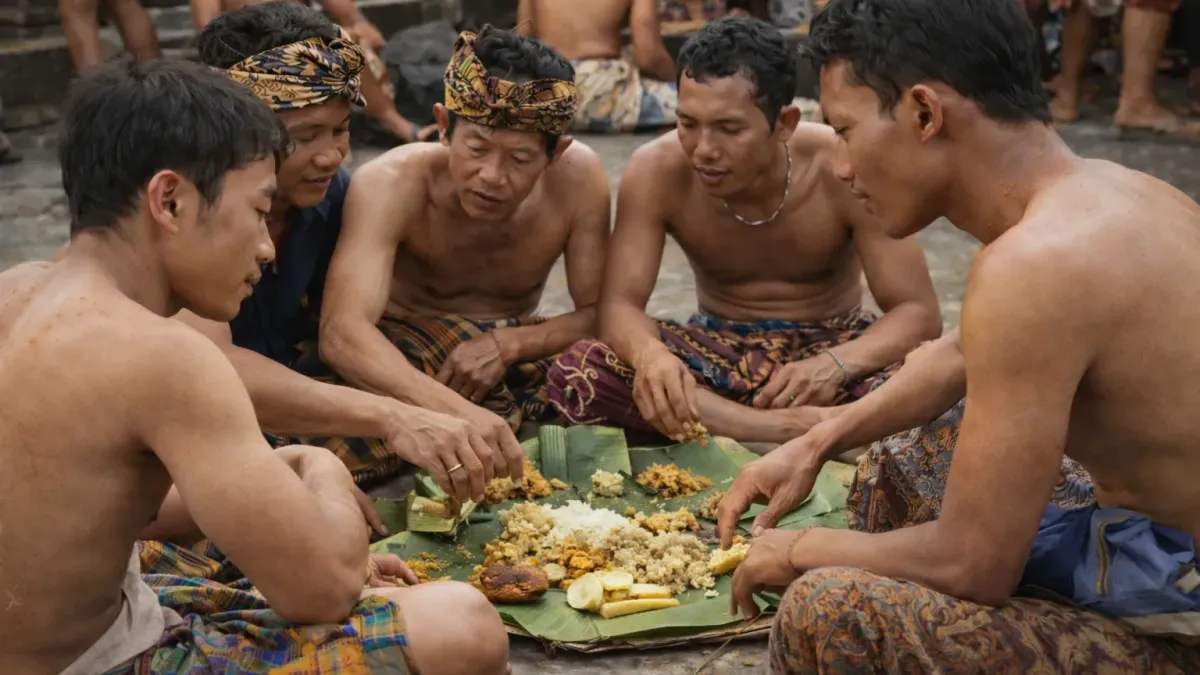
Walk into any fashionable modern restaurant in Seminyak, Canggu, or Ubud, and you will find meticulous individual plating, gold-rimmed ceramic dishware, and separate appetizer-entree-dessert sequences designed for solitary contemplation. But travel deeper into the villages of Bali—or attend a traditional temple festival (*Odalan*) in Karangasem or Bangli—and you will witness a radically different gastronomic philosophy: Megibung, the sacred Balinese tradition of communal dining where strangers sit cross-legged in a circle sharing food from a single, expansive banana leaf platter.
In Balinese culture, food is never just nutrition or individual indulgence; it is a sacred offering (*Prasad*), a living social glue, and a physical manifestation of Tat Twam Asi—the ancient Hindu-Balinese philosophical principle meaning "I am you, and you are me." This comprehensive culinary exploration reveals the historical roots of Megibung, the complex alchemy of the Balinese spice paste (*Base Genep*), the unwritten etiquette of communal eating, and how travelers can respectfully experience this timeless feast today.
1. The Royal Origins of Megibung in Karangasem
The tradition of Megibung originated in 1692 CE under the legendary monarch of East Bali, I Gusti Anglurah Ketut Karangasem. During a military campaign to quell regional unrest in neighboring Lombok, the King halted his army for rest and food.
Rather than dining separately in royal seclusion while his soldiers ate basic field rations, the King ordered that food be prepared in giant iron cauldrons and piled high upon woven palm leaf platters (*dulang*). The King sat directly on the ground alongside his generals, foot soldiers, and camp attendants, decreeing that everyone—regardless of caste (*warna*) or social status—would eat the exact same meal from the same leaf.
This radical act of egalitarian solidarity not only forged deep loyalty within his ranks, but also crystallized into an enduring cultural custom. Today, Megibung remains the supreme centerpiece of community celebrations across Bali, performed during weddings, tooth-filing ceremonies (*Metatah*), temple anniversaries, and collective harvest festivals.
2. Anatomy of a Megibung Feast: The Selauk Circle
A traditional Megibung feast is structured around small dining units known as a Selauk. Exactly 5 to 8 people sit cross-legged in an intimate circle facing one central platter called a Gibungan.
| Dish / Component | Traditional Preparation | Cultural & Flavor Profile |
|---|---|---|
| Nasi Sela / Nasi Putih | Steamed highland white rice mixed with sweet cassava or yellow corn. | Forms the central mound (*gibungan*), representing the cosmic Mount Meru. |
| Sate Lilit & Sate Lembat | Minced pork, duck, or coastal fish mixed with grated coconut and roasted over coconut husks. | Spiced on fragrant stalks of lemongrass; tender, sweet, and aromatic. |
| Lawar Khas Bali | Finely minced meat, green jackfruit, long beans, and toasted coconut tossed in fresh spices. | The quintessential ceremonial dish; balanced between rich coconut fat and spicy heat. |
| Ayam / Bebek Betutu | Free-range chicken or duck slow-roasted for 12 hours wrapped in areca palm leaves. | Meat falls cleanly off the bone, deeply infused with wild turmeric and torch ginger. |
| Urutan & Tum | Traditional Balinese spiced pork sausages and banana-leaf steamed herbal parcels. | Richly fermented with garlic, shallots, galangal, and kaffir lime zest. |
| Kuah Balung / Komoh | Rich, aromatic bone broth simmered with galangal and black pepper. | Served in small coconut shells to cleanse the palate between spicy bites. |
3. The Alchemy of Base Genep: The Mother Spice Paste
Every element of authentic Balinese cuisine is powered by Base Genep (literally "the complete spice paste"), a centuries-old herbal mixture rooted in Ayurvedic and traditional Balinese botanical medicine (*Lontar Usada*). Unlike modern industrial food seasonings that rely on monosodium glutamate (MSG) or refined sugar, Base Genep achieves depth through the harmonious synergy of sixteen root herbs and seeds:
- The Underground Rhizomes: Galangal (*isen*), fresh turmeric (*kunyit*), aromatic ginger (*kencur*), and wild ginger (*jahe*).
- The Alliums & Heat: Purple Balinese shallots, mountain garlic, and fiery bird's eye chilies (*tabia krinying*).
- The Forest Aromatics: Lemongrass, kaffir lime leaves, candlenuts (*kemiri*), coriander seeds, white peppercorns, and clove.
- The Fermented Depth: Artisan sea salt harvested on black volcanic sands at Kusamba Beach and fermented shrimp paste (*terasi*).
Grinding these herbs by hand on a heavy volcanic stone mortar (*cobek*) releases volatile essential oils that cannot be replicated by electric blenders, creating the signature earthy, fragrant warmth that defines genuine Balinese gastronomy.
4. Unwritten Rules of Megibung Etiquette
Eating in a Megibung circle requires mindfulness, mutual respect, and adherence to ancient table etiquette:
- Eat Strictly with the Right Hand: The left hand is traditionally reserved for personal hygiene and must never touch communal food. Use your right fingers to gently knead a small ball of rice with side dishes.
- Respect Your Quadrant: Each diner eats strictly from the quadrant of the banana leaf directly in front of them. Reaching across the platter into someone else's section is a major social taboo.
- Synchronized Pacing: No one begins eating until the senior elder of the circle gives a blessing (*Matur Piuning*). Diners are encouraged to pace themselves so that everyone in the circle finishes around the same time; leaving a single diner eating alone while others watch is considered deeply impolite.
- No Food Wastage: Every grain of rice represents Dewi Sri, the goddess of fertility and agriculture. Leaving food scattered on the ground violates the sacred connection to the farmers and water temples of the Subak irrigation system.
5. Where Travelers Can Experience Authentic Megibung Today
While Megibung is fundamentally a ceremonial village tradition, several authentic cultural centers and heritage restaurants in East Bali and Ubud offer travelers an ethical, respectful introduction to communal dining:
- Desa Wisata Tenganan Pegringsingan (Karangasem): Bali's oldest indigenous Bali Aga village regularly hosts communal Megibung feasts during the annual *Usaba Sambah* festival.
- Warung Megibung Khas Karangasem (Amlapura): A family-run institution in the royal capital of Karangasem serving daily banana-leaf Megibung platters with authentic local duck, fish sate lilit, and kuah ares (banana-stem broth).
- Regenerative Farm-to-Table Experiences: Several organic permaculture retreats in Bangli and Tabanan integrate communal banana-leaf dining, as profiled in our comprehensive guide to Farm-to-Table Bali & Regenerative Warungs.
Sharing a meal in a Megibung circle breaks down linguistic, racial, and cultural barriers. In that circle, you are no longer a hurried tourist watching Bali through a smartphone screen; you are an honored guest welcomed into the eternal family of the island.